Google AI Mode books hotels directly, Hotelbeds margins shrink, Germany online channel hits 46%
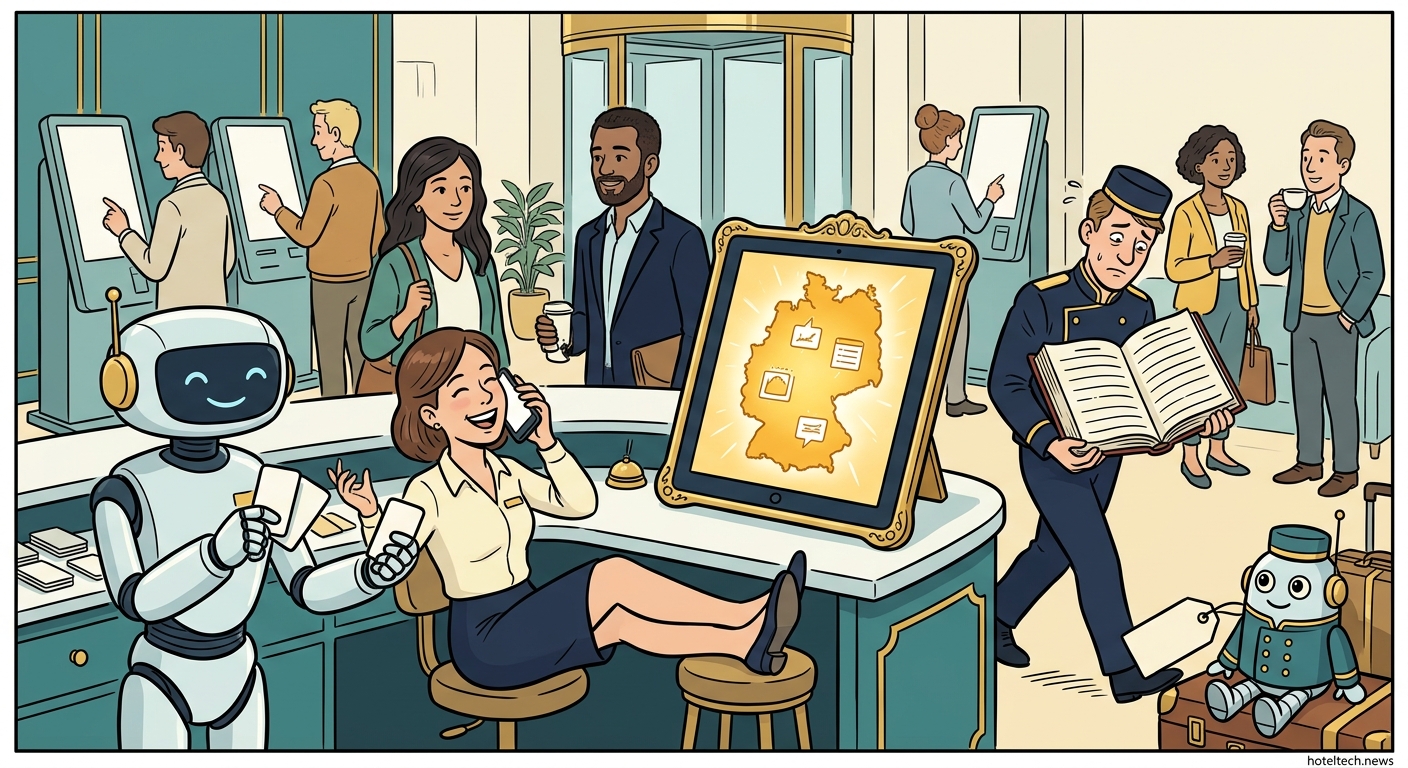
Google has opened the door to booking a hotel directly in its search engine through AI Mode, putting the biggest player on the planet at the center of hotel distribution. Hotelbeds' shrinking margins, meanwhile, confirm what many feared: scale alone no longer protects the bed bank's economics. And in Germany, the online channel already concentrates 46% of summer 2026 sales, five points more than a year ago. Three stories, one conclusion: the battleground for the traveler's click is shifting faster than ever.
We continue with the thread we opened yesterday in AI visibility for hotels: a webinar with the answers. The difference now is that AI is not just helping travelers find hotels, it's also letting them book without leaving the search engine.
Today's brief
Google AI Mode: the search engine becomes a booking engine
Google has launched in the US the option to book hotels directly through AI Mode, reaching agreements with OTAs and hotel chains, as reported by Hosteltur. The user chats with the AI, sets preferences and books in a single conversation, with reviews included.
The interpretation is clear:
- Google is no longer just a traffic source. It's becoming a transaction platform.
- Hotels that rely on Google Ads are now competing with their own paid results inside an AI conversation.
- The winners will be those who master AI visibility and connect their direct booking engines to this new channel.
Hotelbeds: scale is no longer enough
The dominant independent bed bank is seeing its margins shrink. Skift analyzes that the strategy of scale to dominate distribution no longer protects its economics. The question is who eats that margin: OTAs, the hotel itself or a more agile intermediary.
Germany is booking everything online
The online channel captures 46% of the accumulated volume for summer 2026, five points more than a year ago, according to Hosteltur. In last-minute business, online captures 65% of the almost 1.1 billion euros generated between June and July.
German travelers have decided: the phone or the physical agency is no longer the first option, even at the last minute. This forces any hotel with a German clientele to rethink its direct channel.
Hotel tech
ExplorUS: six systems down to one
ExplorUS has integrated six separate systems into a single Cloudbeds platform to run hotels, restaurants, retail, camping and marinas at 30 parks nationwide, as published by Hotel News Resource. The operator was managing each asset type with a different system, which complicated operations and multiplied costs. With one platform, they've gained a unified view and simplified training.
This case is a good benchmark for multi-asset groups: the fragmentation of software is often the hidden cost behind operational inefficiency. Consolidating doesn't just save money, it gives you control. And that control is what allows you to expand without operational chaos.
The decision also confirms the trend of cloud-based PMS as the backbone for hospitality beyond hotels. Camping, marinas and retail run on the same data core, which opens the door to more sophisticated pricing and cross-selling.
Renovations tied to technology
Hotel Dive reports that the Sheraton Tribeca has completed a multimillion-dollar renovation and the Hyatt House DFW Airport hotel has topped out, in its Hotel Dive newsletter. These openings and renovations almost always carry a technology component: new PMS, upgraded Wi-Fi, mobile key or smart room controls.
When a hotel renovates, the technology budget is no longer the last item on the list. It's the one that defines the guest experience and operational efficiency. For vendors, this means a continuous pipeline of replacement opportunities.
Revenue and distribution
The bed bank dilemma
The Hotelbeds case is a warning for anyone who thinks scale is the only moat. Skift shows that the bed bank that grew through acquisitions now finds its margins under pressure. The question is who captures that lost margin in the value chain: OTAs, hotels selling direct, or more agile intermediaries.
My reading: bed banks remain essential to distribute to markets where direct agreements don't reach, but they're no longer untouchable. Hotels with a strong direct channel and good connectivity have more room to negotiate.
Germany: the direct channel lesson
The German online channel's advance is not just a statistic, it's a roadmap. Last-minute bookings, the most loyalty-free segment, are already 65% online. The traveler compares, reads reviews and clicks. And whoever appears in that comparison, wins.
This explains why Google's AI Mode matters so much: the search engine is the starting point for most of those online bookings. If AI takes control of the recommendation, the SEO and paid strategy has to adapt now.
AI in hospitality
Google puts AI at the center of the conversation
The launch of AI Mode for hotel booking in the US is the most direct step yet by a major tech company towards AI-controlled distribution. Hosteltur details that the tool compiles lists with reviews and allows booking without leaving the conversation. It's not a widget: it's an AI sales agent.
For hoteliers, the relevant point is not the gadget but the new rule: AI decides which hotels to recommend based on user preferences. That means optimizing for AI visibility is no longer optional. Whoever doesn't appear in the AI answer, doesn't exist for that traveler.
The glass half full: if hotels manage to appear in those AI conversations, they have a direct acquisition channel without OTA commissions. The challenge is getting there.
Startups and funding
The consolidation wave
The ExplorUS case with Cloudbeds is part of a broader trend: multi-property operators choosing a single integrated platform over a stack of specialized tools. Hotel News Resource shows how a company diversifying its offering preferred a single technology partner over integrating six different systems. This is the clearest signal yet for vendors: the value is in consolidation, not fragmentation.
The opportunity opens up for platforms that cover operations, revenue and guest experience in one place. For specialized startups, the challenge is to integrate well, because the buyer no longer wants to manage six contracts.
Markets
The portfolio model in restaurant tech
The CEO of Edible Brands argues in Restaurant Dive that the future of restaurant growth is not the brand, but the portfolio of chains. For F&B managers, this implies that restaurant technology must serve a set of different concepts under one roof, not a single operation.
This directly affects hotel F&B: the days of the single restaurant with its own software are fading. The winning model is a portfolio of on-site concepts (restaurant, bar, takeaway, events) managed from a unified digital core.
What we are watching
- The expansion of Google AI Mode beyond the US and English. That will be the moment it's a global distribution channel.
- The evolution of Hotelbeds margins in the next results. If they keep falling, the bed bank model will have to reinvent itself.
- German online sales data for the winter 2026/27, currently 2% below the previous year, according to Hosteltur.
- The Skift Global Forum 2026 in New York, starting September 22. The role of AI in distribution will likely be the central theme.
Technology is moving distribution faster than your commercial strategy can adapt. The good news is that the direction is clear: AI-assisted booking, online dominance and platform consolidation. Those who get on that wave now will arrive early. Those who wait will pay the cost of being late.
Quick questions
What does Google AI Mode mean for hoteliers?
Why are Hotelbeds margins shrinking?
How much of German hotel sales are online?
What is ExplorUS doing with Cloudbeds?
Why does the Sheraton Tribeca renovation matter for tech?
Companies
The hotel tech and travel tech companies we follow, plus the ones surfacing in today's news.
- In today's news
- CloudbedsPlataforma PMS que ha permitido a ExplorUS consolidar seis sistemas en uno para gestionar hoteles, restaurantes y campings en 30 parques de EEUU.
- HotelbedsEl mayor bed bank independiente del mundo, cuyos márgenes a la baja reabren el debate sobre el valor real del intermediario en la distribución hotelera.
- NethitsVendor español que conecta staff, huéspedes y datos en tiempo real con su plataforma GuextSuite, para acabar con la información fragmentada en la operación.
Was this article useful?
The daily brief
The hotel tech brief, in your inbox
PMS, revenue, distribution, AI and travel tech startups. One sharp email a day. Free.
The brief hoteliers who buy technology read every morning.
Editorial content by Hotel Tech News. It may contain errors. Verify anything important with the original source.
This article may mention third-party products, companies or services for informational purposes. Hotel Tech News does not endorse them and is not responsible for them or for what they offer. Editorial content curated by the Hotel Tech News team.